




We have all been there at some point in our lives. You build a brand new PC or you rescue an old laptop from a dusty closet, and right there in the bottom right corner of the screen is that annoying, transparent text that says “Activate Windows. Go to Settings to activate Windows.” It is like a tiny pebble in your shoe; it does not stop you from walking, but it is constantly irritating. For many, the cost of a full retail license for Windows 10 or 11 can be quite a shock, especially if you are a student or someone just trying to get a secondary machine running for basic tasks. This is where the Microsoft Activation Script, or MAS as it is known in the tech community, enters the conversation.
In this long guide, I want to talk to you like a friend who has spent way too many hours tinkering with computers. I want to explain what MAS is, why it has become the gold standard for activation, and how you can use it safely. I will also share my own thoughts on the ethics of it and why I believe it is a much better choice than the shady “activator” programs we used to see back in the early 2010s.
What is the Microsoft Activation Script?
At its simplest level, the Microsoft Activation Script is a collection of scripts hosted primarily on GitHub under the name “massgravel.” Unlike the old school activation tools that were often mysterious .exe files that asked you to disable your antivirus (which is a huge red flag), MAS is mostly transparent. It uses PowerShell, which is a tool already built into your Windows system, to execute commands that communicate with Microsoft’s own activation servers or mimic the way large businesses activate their computers.
The reason MAS stands out in the tech world is because of its cleanliness. When I first discovered it on a forum years ago, I was skeptical. I had seen too many “cracks” that came bundled with trojans or miners that would slow your computer to a crawl. But MAS was different. It was open source. This means that anyone who knows how to read code can look at exactly what the script is doing. There are no hidden backdoors. It is just a set of instructions that tells Windows to look at its own licensing status in a new way.
The Three Main Ways MAS Works
If you open the MAS menu, you will see a few different options. It can be a bit overwhelming if you do not know the lingo, so let me break it down for you based on how I have used it on various machines.
First, there is the HWID (Hardware ID) Activation. This is, in my opinion, the most impressive part of the script. When you use this method, the script communicates with Microsoft servers to grant your computer a “Digital License.” This license is tied to your motherboard. The amazing thing about this is that it is permanent. You can wipe your hard drive, reinstall Windows from scratch, and as soon as you connect to the internet, Windows will recognize your hardware and activate itself automatically. I used this on an old ThinkPad I bought from a thrift store, and even after swapping the SSD, the activation stayed. It is essentially indistinguishable from a genuine license you would get if you bought the computer brand new from a store.
Second, we have KMS38. This is a slightly different beast. KMS stands for Key Management Service, which is a system Microsoft created for big companies to activate thousands of computers at once. Normally, these activations expire every six months. However, some clever developers found a way to extend this “grace period” until the year 2038. This is mostly used for specific versions of Windows like Windows Server or Enterprise editions. For the average person using Windows 11 Home or Pro, HWID is usually the better choice, but KMS38 is a fantastic fallback for specialized systems.
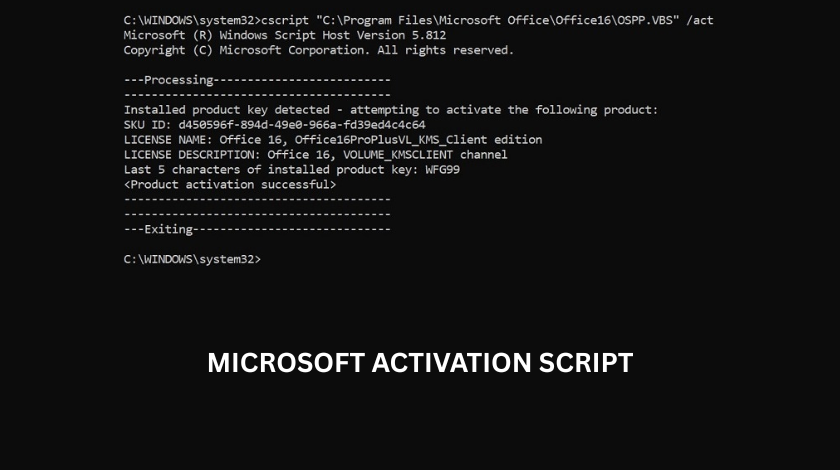
Third is the Online KMS method. This is what you would typically use if you are trying to activate Microsoft Office. Unlike Windows, Office does not usually support a permanent hardware ID license in the same way. The Online KMS script sets up a small, non intrusive scheduled task that renews the license periodically in the background. It does not use many resources, and it keeps your Word and Excel programs running without those annoying “Product Unlicensed” banners.
Is It Actually Safe to Use?
Safety is the number one question I get when I mention MAS to my less tech savvy friends. In the world of software, nothing is ever 100 percent risk free, but MAS is as close as it gets. Because it is hosted on GitHub, it is constantly being scrutinized by the global developer community. If the creators tried to sneak in a virus, it would be spotted and reported within hours.
When you run MAS, your antivirus (like Windows Defender) might occasionally flag it as a “HackTool” or a “PUP” (Potentially Unwanted Program). This is not because it is a virus that will steal your bank passwords. Instead, it is because Microsoft has instructed the antivirus to flag anything that bypasses their licensing system. It is a protective measure for their profit margins, not necessarily a warning about your computer’s health. In my years of using it on test benches and personal media servers, I have never seen a single instance of malicious behavior from the official massgravel scripts.
How to Use MAS: The Easy Way
One of the coolest things about MAS is that you do not even have to download a file if you do not want to. They have created a “one line” command that you can paste into PowerShell. This is the method I always use because it ensures I am getting the most up to date version directly from the source.
To do this, you simply right click your Start button and select “PowerShell (Admin)” or “Terminal (Admin).” Then, you copy and paste the specific command found on their official GitHub page or website. Once you hit enter, a blue window pops up with a simple numbered menu. You press ‘1’ for HWID activation, wait about thirty seconds, and you are done. There is no installation process, no junk files left behind, and no need to restart your computer in most cases. It is a very “clean” experience that respects the user’s time and technical ability.
I remember helping my cousin activate his gaming PC using this method. He was terrified of “hacking” his computer, but when he saw that it was just a simple menu that took less than a minute, he was blown away. It beats searching through sketchy websites for a product key that probably won’t work anyway.
MAS vs. The Old Guard (KMSPico and Others)
If you have been around the internet for a while, you probably remember KMSPico. For a long time, that was the only way to get Windows activated for free. But KMSPico had a dark side. Because it was a compiled .exe file, many people started “repacking” it with malware. You would download it from a random site, and suddenly your browser was full of ads and your CPU was running at 90 percent.
MAS is the “New Guard.” It represents a shift toward transparency. It does not install a service that runs in the background 24/7. It does not modify your system files in a way that breaks Windows Updates. In fact, after you use MAS, you can continue to update Windows normally, just like a paying customer would. This reliability is why I always recommend it over any other tool. It does the job, cleans up after itself, and stays out of your way.
Ethical Reflections and The Gray Area
I want to take a moment to be honest about the ethics here. Using MAS is, strictly speaking, a violation of Microsoft’s Terms of Service. It is a way to use their software without paying them for the license. If you are a business or a professional using your computer to make money, I truly believe you should buy a genuine license. It is part of your business expenses, and it supports the developers who build the OS.
However, I also believe there is a gray area. If you are a student on a tight budget, or if you are reviving a 10 year old laptop to give to a kid so they can do their homework, paying 100 dollars for a Windows key feels unfair. Microsoft already makes a massive amount of money from data and telemetry. For many people, MAS is a tool for digital inclusion. it allows people to use a modern, secure operating system without a high financial barrier. That is my personal opinion, and while Microsoft might disagree, the tech community has largely embraced MAS as a necessary tool for enthusiasts.
Troubleshooting and Common Hiccups
Sometimes things do not go perfectly. The most common issue I have seen is when people try to activate Windows on a computer that has absolutely no internet connection. Since the HWID method needs to “talk” to Microsoft’s activation servers to register the digital license, you need to be online for at least a minute.
Another thing to watch out for is “S Mode.” If you bought a very cheap laptop, it might be in Windows 10 or 11 S Mode, which only allows apps from the Microsoft Store. You will need to switch out of S Mode (which is free in the settings) before you can run PowerShell commands. Lastly, if you have a very aggressive third party antivirus like McAfee or Norton, you might need to temporarily disable their “Real Time Protection” because they are very sensitive to scripts that touch system licensing files.
Final Thoughts
The Microsoft Activation Script is a testament to what a dedicated community of developers can do. They took a complicated, often dangerous process and turned it into a transparent, simple, and effective tool. Whether you are tired of the “Activate Windows” watermark or you need to get Office working for a school project, MAS is the most reliable way to handle it in the modern era.
It is fast, it is safe, and it is incredibly easy to use. Just remember to use it responsibly and understand the technology behind it. The world of Windows activation has changed a lot since the days of sketchy “crack” sites, and MAS is the reason why.
Conclusion
In summary, the Microsoft Activation Script (MAS) is the premier open-source solution for activating Windows and Microsoft Office. By utilizing legitimate system processes like HWID and KMS38, it provides a permanent or long term activation without the risks associated with older, malware-ridden tools. While it exists in a legal gray area, its transparency on platforms like GitHub has made it a favorite among tech enthusiasts and casual users alike. It simplifies a once-daunting task into a few clicks in a PowerShell window, ensuring that anyone can have a fully functional computer regardless of their budget.
FAQ
1. Is the Microsoft Activation Script a virus?
No, it is not a virus. It is a collection of open source scripts. While some antivirus programs flag it as a “HackTool” because it bypasses licensing, the code itself does not contain malicious software like trojans or keyloggers.
2. Is the activation permanent?
Yes, if you use the HWID (Hardware ID) method for Windows 10 or 11, the activation is permanent and tied to your motherboard. You can even reinstall Windows and it will remain activated.
3. Does this work for Microsoft Office?
Yes, MAS includes an Online KMS method specifically designed to activate various versions of Microsoft Office, including Office 365 and Office 2021.
4. Will I still get Windows Updates?
Absolutely. Using MAS does not block your ability to receive official security updates or feature improvements from Microsoft. Your system will behave like any other genuinely activated PC.
5. Do I need to download anything?
Not necessarily. You can run MAS by simply pasting a single line of code into the Windows PowerShell (Admin) terminal, which downloads and runs the script directly from the source.